
This search of a new category of consumption created an opportunity for introduction to music I had previously chuckled at but never heard (a recurring theme in my musical education). I remember laughing at the names of the bands my neighbor Cory Kemp's older brother listened to: The Dead Milkmen, The Dead Kennedies, some French words that ended in Mode, etc.. I had never been interested, but I suppose that my new sense of social homelessness made me more open-minded. About this time I went to a dance where "Should I Stay or Should I Go?" was played. That song caught my attention like no other had in a long time. The DJ (my "girlfriend's" older brother) told me about the local college radio station 90.5 WBER that played bands like The Clash. This radio station led me to the discovery of almost all of the music I listened to during my first years of high school.
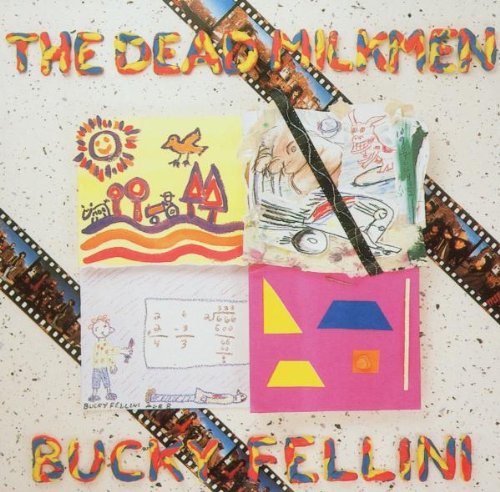 My first serious experiment in this new, secluded, almost secret genre, was to borrow Cory Kemp's older brother's copy of Bucky Fellini by The Dead Milkmen. I quickly grew enamored of the sarcastic and mocking humor as well as their lack of musical ability. ("I could play this!" I flattered myself.) Now that BitTorrent has put me in touch with this album again after a decade or more of not having heard it I realize how much The Dead Milkmen are like The Simpsons: They layer allusions, puns, and sarcasm so thickly that you soon realize music is not their objective; rather it is humor and commentary. (And it's a good thing, too, because I really am surprised at how musically challenged The Dead Milkmen remained after so many years of playing music.)
 Soon after this successful experiment I borrowed Nevermind the Bollocks, Here's The Sex Pistols and the marching footsteps of the opener, "Holidays in the Sun," spoke to my teenage anger like nothing before. I wasn't sure what bollocks were, but the newborn rebel in me thought it was so mature to overlook the shocking nature of the band's name in order to see the deeper political message underneath. Plus, this was really my first exposure to power chords and punk. Ahhh, power chords....
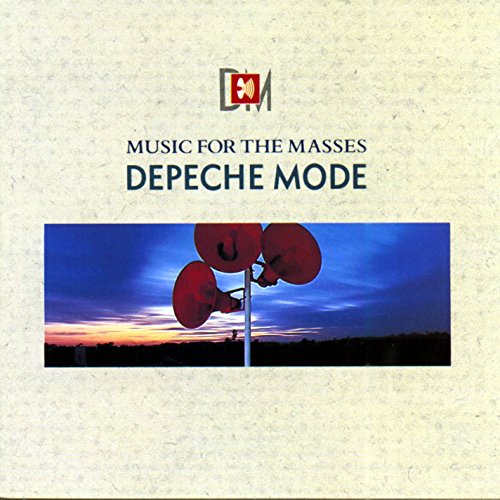 I wasn't always angry and my overly-romantic teenaged brain was also intrigued by Depeche Mode's Europop sound. I credit an old girlfriend, Stephanie Workman, with this introduction. She had been trying for a couple of years to get me to listen to these men whose sexual orientation was ambiguous at best. But I was reluctant to leave the mainstream for some weird French band. (What did I know?) Now I was ready, and the first album I acquired was Music for the Masses. I was first intrigued by the psuedo-Soviet-propaganda cover art. (This was still during the Cold War, remember.) Also impressive was the fact that they could compose classical-sounding songs (see "Pimpf") as well as pop music, and instrumentals with cool sound effects (like "Agent Orange"). Eventually, I would collect all of their albums ending with Violator, which was released about the time I was moving away from electronic music for a while.
